

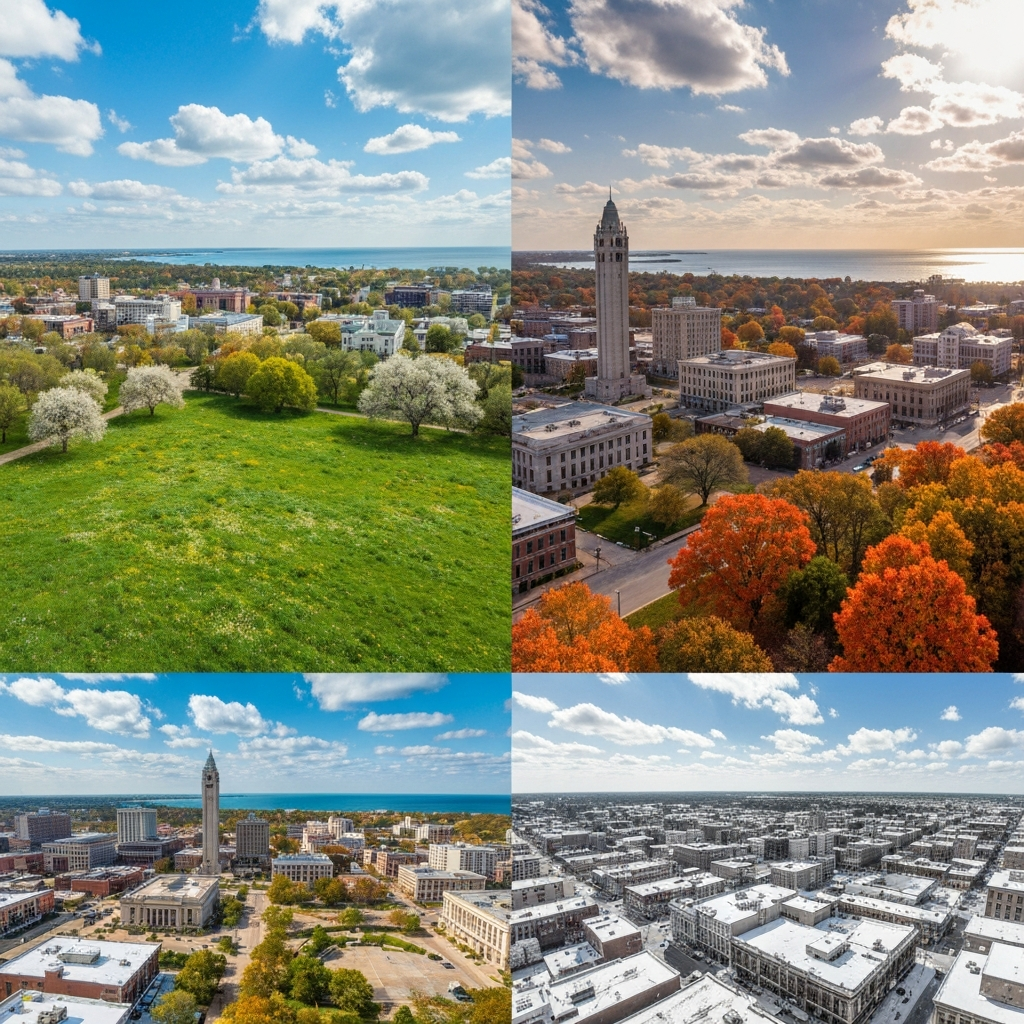
Springfield, Illinois, experiences a diverse range of weather conditions throughout the year, characteristic of its humid continental climate. Understanding these patterns can help residents and visitors prepare for the varying seasons.
Spring: A Season of Renewal
Spring in Springfield brings mild temperatures and increased precipitation. Average highs range from 53°F (12°C) in March to 75°F (24°C) in May. Rainfall also increases during this period, with May averaging 4.64 inches (118 mm) of precipitation. This season is marked by blooming flora and is ideal for outdoor activities.
Summer: Warm and Humid
Summers are typically warm and humid, with average highs peaking at 86°F (30°C) in July. Humidity levels are higher, contributing to the warm feel. June is the wettest month, averaging 4.78 inches (121 mm) of rainfall. Thunderstorms are common, so it’s advisable to stay updated on weather forecasts during outdoor plans.
Autumn: Crisp and Colorful
Autumn sees a gradual cooling, with average highs decreasing from 80°F (27°C) in September to 53°F (12°C) in November. Rainfall diminishes, and the changing foliage offers picturesque landscapes, making it a favorite season for many.
Winter: Cold and Snowy
Winters are cold, with average highs around 36°F (2°C) in January and lows dipping to 20°F (-7°C). Snowfall is common, with December averaging 2.15 inches (55 mm) of precipitation. Residents should prepare for freezing temperatures and occasional snowstorms.
Environmental Considerations
Springfield’s air quality has been a concern. The American Lung Association’s 2025 “State of the Air” report indicated worsening air quality, with the area ranked 40th worst in the nation for ozone pollution, averaging 6.7 unhealthy days per year. Efforts are ongoing to address these environmental challenges.
Understanding Springfield’s climate patterns is essential for planning daily activities and long-term decisions. Staying informed about seasonal changes and environmental issues can enhance the quality of life for all residents.