

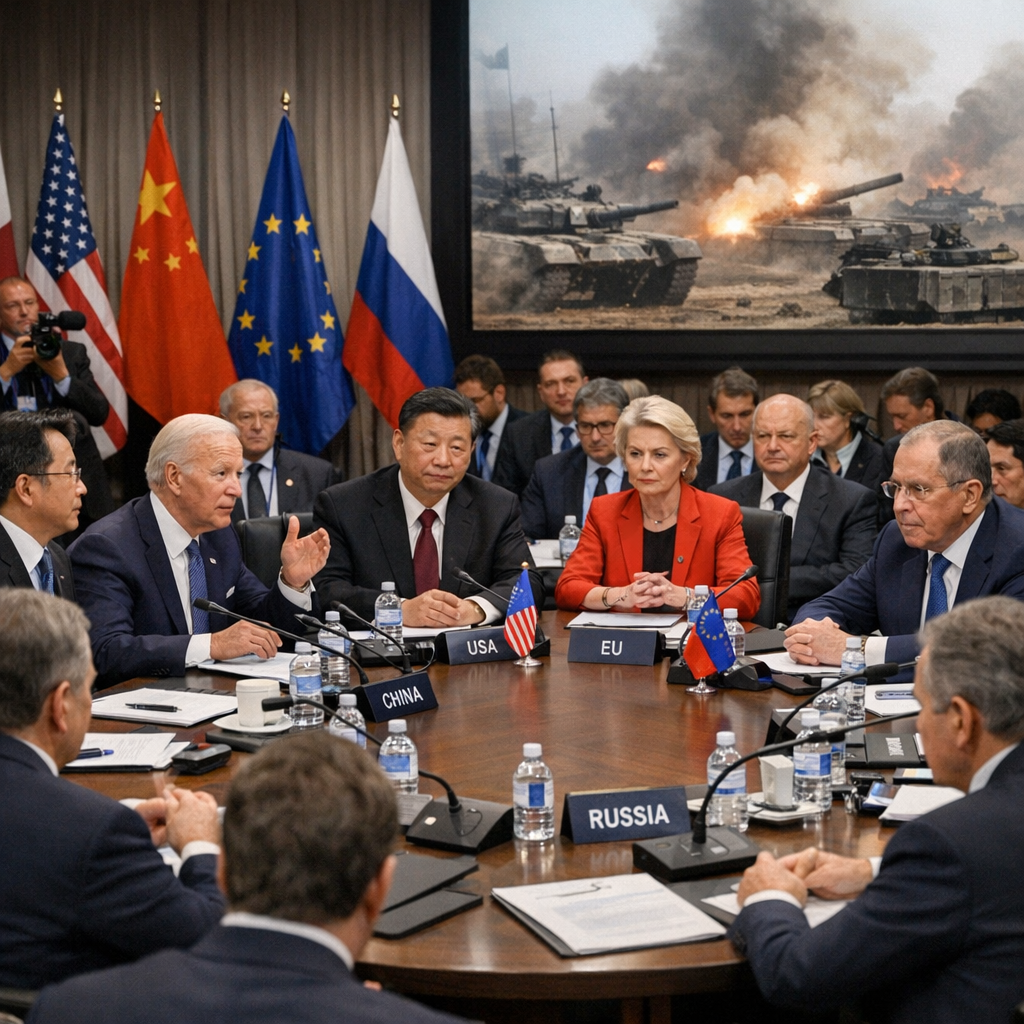
The global economy is currently navigating a complex landscape shaped by geopolitical tensions, particularly the ongoing conflict in the Middle East. This situation has led to significant energy supply disruptions, contributing to rising inflationary pressures and a slowdown in economic growth.
Impact of Middle East Conflict on Global Growth
The Organization for Economic Cooperation and Development (OECD) has outlined two potential scenarios in its latest Economic Outlook. In the “time-limited disruption” scenario, where energy production and trade gradually return to pre-conflict levels starting mid-2026, global growth is projected to slow from 3.4% in 2025 to 2.8% in 2026, before picking up to 3.1% in 2027. Conversely, a “prolonged disruption” scenario, assuming continued energy production and export disruptions into 2027, forecasts global growth slowing to 2.1% in 2026 and 1.8% in 2027. This prolonged scenario would have lasting adverse effects, especially on economies in Asia, Europe, and developing countries most vulnerable to energy and food price shocks.
Inflationary Pressures and Monetary Policy Responses
Inflation has become a pressing concern, with the energy shock leading to higher commodity prices and indirect effects boosting prices across various sectors, notably agriculture and food. In the time-limited disruption scenario, annual consumer price inflation in G20 economies is expected to rise to 4.0% in 2026, up from 3.4% in 2025, before easing to 3.1% in 2027 as energy and food price pressures subside. Central banks are advised to remain vigilant, balancing the need to control inflation without stifling economic growth. Monetary policy responses may become necessary if broader price pressures intensify or if growth weakens significantly.
Regional Economic Outlooks
In the United States, GDP growth is projected at 2.0% in 2026, before moderating to 1.8% in 2027. The euro area is expected to experience modest growth of 0.8% in 2026, improving to 1.2% in 2027. China’s growth is projected to slow to 4.5% in 2026 and 4.3% in 2027. These projections underscore the widespread impact of current geopolitical tensions on major economies worldwide.
Policy Recommendations
To mitigate the adverse effects of the current crisis, the OECD recommends that government policies be timely, targeted towards those most in need, and provide incentives to reduce energy consumption. Fiscal support measures should be temporary to avoid further increases in public debt and to preserve incentives to save energy. Additionally, countries are encouraged to diversify energy supply sources and improve energy efficiency to reduce vulnerabilities to future shocks.
As the global economy faces these challenges, it is crucial for policymakers to implement strategies that support economic resilience and stability, ensuring that growth can be sustained in the face of ongoing uncertainties.