

By Ava Smith
Recent Council Sessions Stir Debate Over Safety and Accountability
The Springfield City Council has been grappling with rising concerns about how public safety is funded and regulated. A proposed purchase of a new armored vehicle for the police—price tag hovering around $445,000—has drawn criticism over budgeting, timing, and whether general fund dollars are the best source for such spending.
At the same time, handling of a fight at Washington Middle School by school resource officers has prompted alderpersons to request full reviews of use-of-force reports and video footage. These developments have fed broader calls from the community for stronger oversight of policing and transparency in enforcement. Key measures under consideration include independent oversight, more frequent anti-racism training, and tighter controls over surveillance data.
Public Comment, Free Speech & Chamber Conduct Draw Scrutiny
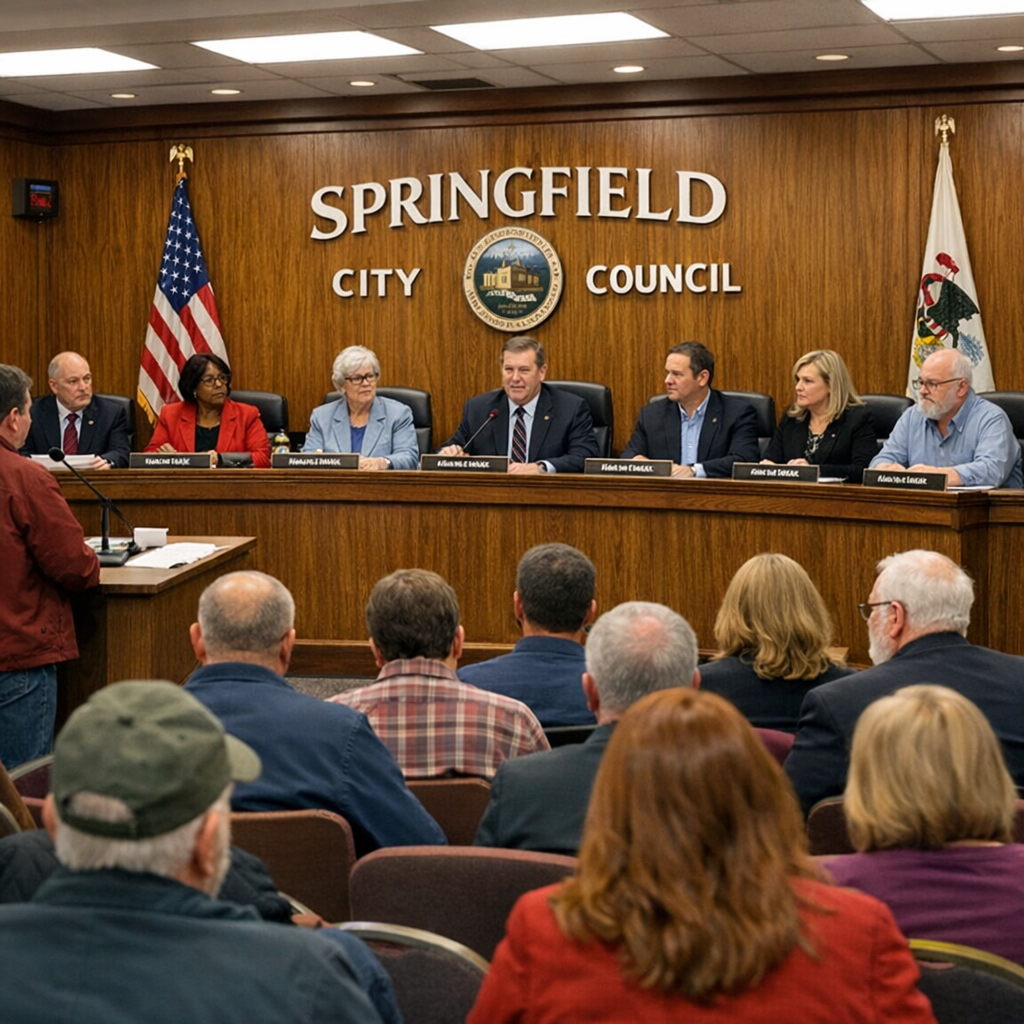
City leaders have also debated changes to rules governing public comment at council meetings. While some alderpersons are pushing for clearer limits—especially amid disturbing online threats and racist remarks—others are urging caution, pointing out legal protections under precedent and concern that vague restrictions could silence community voices.
Tensions have increased over what some residents say is selective enforcement: complaints that certain behaviors by officials go unchallenged while others are treated harshly. Calls for fair and consistent rule-application have grown louder in recent sessions.
Homelessness Efforts: Strategy, Prevention, and Community Standards
Springfield’s strategy to address homelessness, led by Heartland HOUSED and area service providers, continues to evolve. Programs like rapid rehousing, emergency shelter, permanent supportive housing, and street outreach are being aligned under unified community standards. These programs aim to serve anyone facing literal homelessness, domestic violence, or financial crisis—with or without barriers like income or criminal history.
Prevention is central: rental or utility assistance, case management, and support to avoid eviction are being expanded. Meanwhile, groups like Helping Hands, Washington Street Mission, and Fifth Street Renaissance remain on the front lines, offering shelter, food, and wrap-around services.
Challenges Ahead: Trust, Funding & Inclusion
Across these issues—policing, public comment, homelessness—questions of trust are looming large. Residents want confidence that city decisions respect rights, that leadership is responsive, and that vulnerable populations are not sidelined.
Funding remains a hurdle. Some public safety equipment proposals notably lacked grant backing. Homelessness prevention and housing support programs also rely heavily on state or nonprofit funding, which can vary and leave gaps.
Lastly, inclusion—particularly around race and voices from neighborhoods—has become a flashpoint. Whether it’s decisions about supportive housing, responses to racist incidents, or the representation of low-income areas in zoning and development, citizens are pressing for more equitable input and outcomes.
What You Can Do
- Attend or view City Council meetings, especially when these items are on the agenda.
- Reach out to alderpersons and share your views around public safety, particularly topics like armored vehicles, oversight, and community policing.
- Support local homelessness prevention efforts—donate time, money, or expertise to agencies like Heartland HOUSED or Helping Hands.
- Stay informed about proposed ordinances concerning public comment and speech in city spaces. Your voice matters in shaping what’s allowed—and what isn’t.