

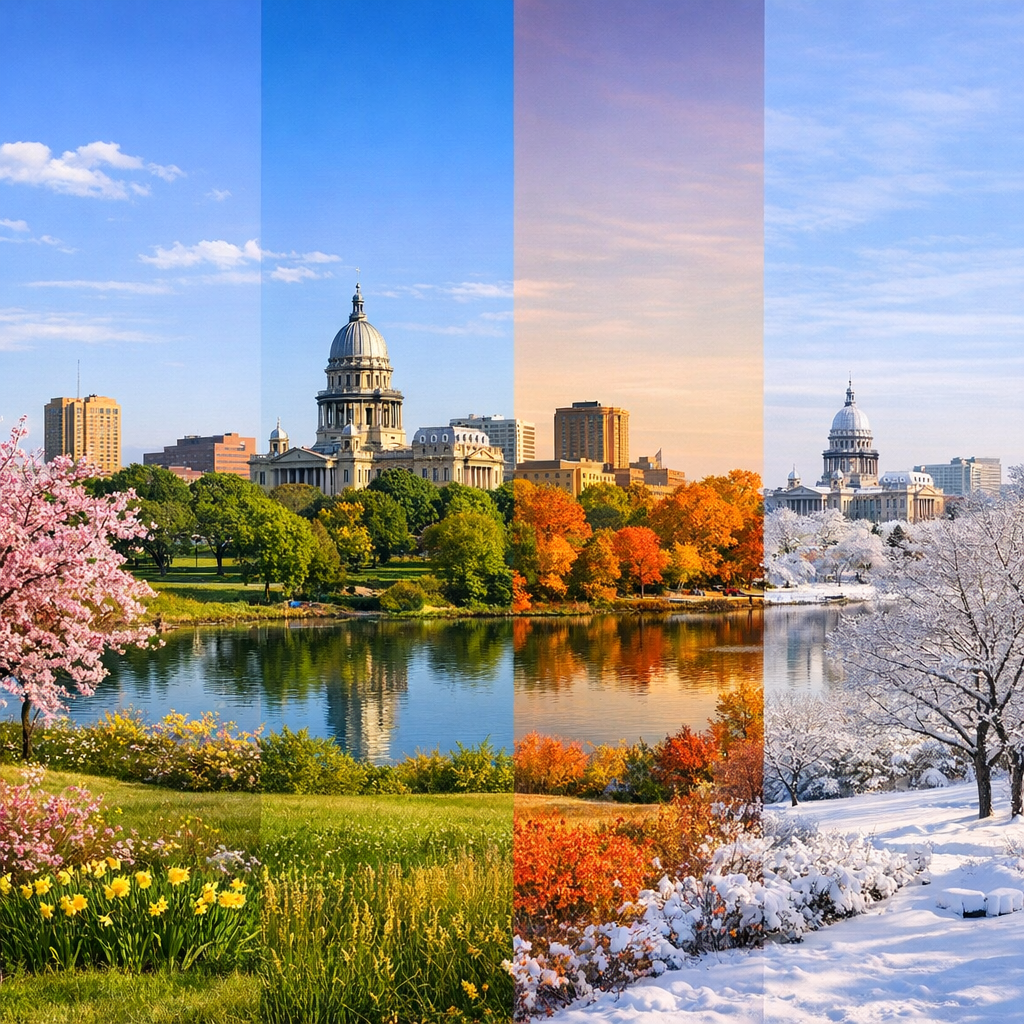
Springfield, Illinois, experiences a diverse climate characterized by distinct seasonal variations. Understanding these patterns is essential for residents and visitors alike.
Spring: A Season of Renewal
Spring in Springfield brings mild temperatures and increased precipitation. Average highs range from 53°F (12°C) in March to 74°F (23°C) in May. Rainfall also increases during this period, supporting the blooming of local flora.
Summer: Warm and Humid
Summers are typically warm and humid, with average highs peaking at 86°F (30°C) in July. This season also sees the highest humidity levels, often reaching up to 84%.
Autumn: Crisp and Colorful
Autumn brings cooler temperatures and vibrant foliage. Highs decrease from 77°F (25°C) in September to 50°F (10°C) in November. This period is also marked by a gradual decline in humidity and precipitation.
Winter: Cold and Snowy
Winters are cold, with average highs around 33°F (1°C) in January. Snowfall is common, contributing to the season’s characteristic landscape.
Environmental Considerations
Springfield’s climate influences various environmental initiatives. For instance, the University of Illinois Springfield’s Green Projects Initiative encourages sustainable practices to mitigate environmental impacts.
Understanding Springfield’s climate is crucial for planning activities, agricultural practices, and supporting local environmental efforts.